I Stopped Paying $500 Per UGC Ad — Here's What I Do Instead
The traditional UGC ad process is broken — 5 tools, 3 weeks, $500 per video. Here's how AI UGC tools changed the math for small brands, and when human creators still win.

Table of Contents
The 5-Tool Treadmill
Here's what making a UGC ad used to look like for me.
Step 1: Browse a creator marketplace (Billo, Insense, Collabstr — take your pick). Spend an hour scrolling through profiles. Maybe two hours.
Step 2: Find someone who fits the vibe. Message them. Wait. Message three more because the first one ghosted you.
Step 3: Negotiate. They want $300, you budgeted $150. Meet at $212 — which is right around the industry average for a UGC video in 2026. Sign a brief.
Step 4: Wait 2-4 weeks for the video. Hope it matches what you asked for.
Step 5: Get the video. It's... fine. Not what you pictured, but close enough. Now edit it (another tool), add captions (another tool), resize for TikTok and Reels (another tool).
Five tools. Three weeks. One video. And you still don't know if it'll convert.
I did this loop for months before I realized the process itself was the problem — not the cost, not the quality, not the creators.
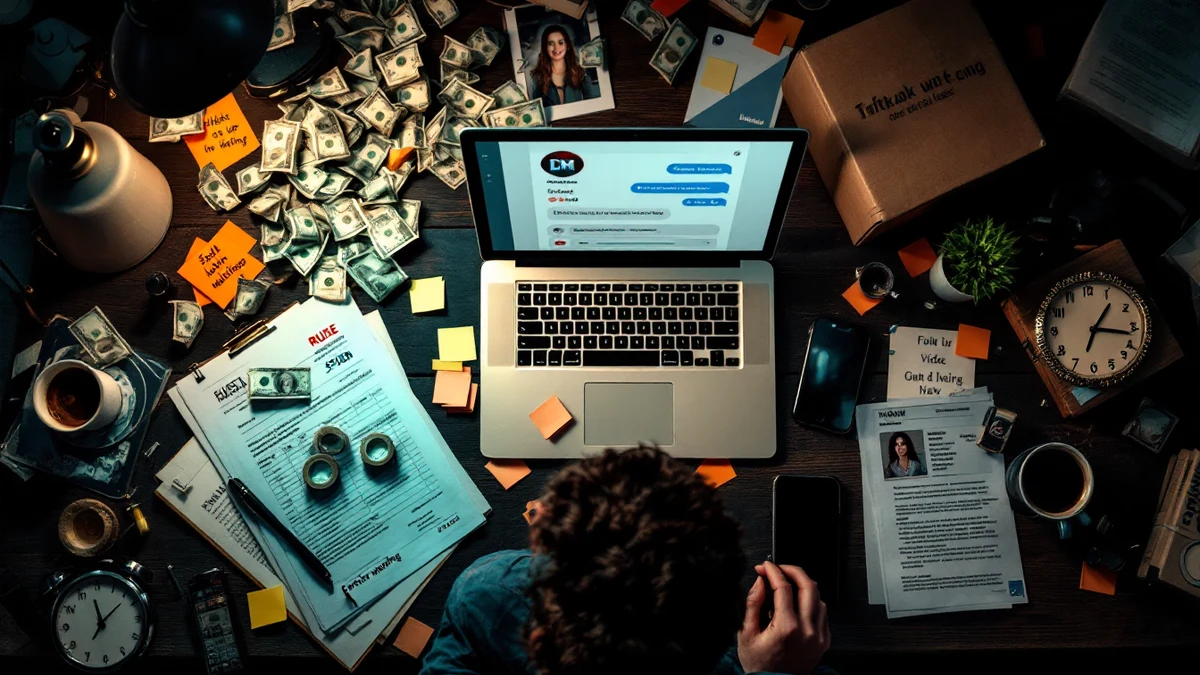
The Real Problem Isn't Money — It's the Process
UGC is actually cheap compared to traditional advertising. Even at $200-500 per video, it's a fraction of what a production house charges.
But here's the thing nobody talks about: you don't know the output until you see it.
You write a brief. You explain your product. You describe the tone, the hook, the CTA. And then you wait. And what comes back might be great. Or it might be a creator reading your script in monotone while their dog barks in the background.
This isn't a knock on creators — most are talented and professional. But the process has no preview button. You're paying upfront for something you can't see until it's done.
Now multiply that by the number of variations you need. To find a winning ad, most brands test 5-10 variations. At $200 each, that's $1,000-$2,000 before you've found what works. Some sources put the number higher — $1,100 to $2,950 for 5 creative variations with traditional UGC.
Then there are the hidden costs: revision fees ($25-75 each), product shipping ($5-50), usage rights extensions (30-50% of base rate for larger creators), and whitelisting fees.
The math starts adding up fast. Not because any single cost is crazy, but because the process demands repetition and you can't shortcut the waiting.
Where Human Creators Still Win
I'm going to be honest here because I think it matters.
Human UGC creators are genuinely better at some things:
Real reactions. When someone actually uses your product and their face lights up — that's hard to fake. The micro-expressions, the genuine surprise, the authentic enthusiasm. AI can lip-sync perfectly, but it can't replicate someone truly experiencing your product for the first time.
Creative range. A good creator brings ideas you'd never think of. They know what works with their audience. They shoot in locations and settings that feel natural to them. You get their personality, their style, their editing instincts.
Trust. 92% of consumers trust recommendations from real people over branded content. When viewers see a real human using your product in their real kitchen, it carries weight that AI avatars are still catching up to.
For large brands with budget, human UGC is still the gold standard for hero content. If you're spending $50k+ per month on ads and you need 2-3 genuinely premium creative pieces, hire real creators. Their best work will outperform AI's best work — for now.
The gap is closing every day, but it's not closed. And pretending otherwise doesn't help anyone. For the full cost and quality breakdown, see our AI UGC vs real creator comparison.
What Changed: The AI UGC Approach

The shift happened when I realized I didn't need the best possible ad. I needed a lot of good ads, fast.
Here's what the process looks like now:
- Pick an avatar (or upload my own photo — could be me, a team member, or a custom image)
- Write a script or let AI generate one based on my product
- Choose a voice
- Hit generate
That's it. A lip-synced UGC-style video in minutes. Not weeks. Not $500. About $1-5 per video depending on the model and length.
The real advantage isn't that each individual AI ad is better than a human-made one. It's that I can make 10 variations in the time it takes to brief one creator. Different hooks. Different scripts. Different avatars. Test all of them, kill the losers, scale the winners.
With inReels, 5 variations cost you $5-25 total. Traditional UGC for the same batch? $1,100-2,950. The math is clear.
With inReels, I also upload my own audio when I want my real voice on the avatar. So the video looks like UGC, sounds like me, and costs almost nothing to produce. You can use any of the built-in voices too — there are options at different price points depending on how realistic you need the lip-sync.
Is it perfect? No. inReels is good and getting better every day. The avatars are convincing, the lip-sync is solid, and the script generator actually writes decent hooks. But I won't pretend it's indistinguishable from a real creator — it's not there yet. It's there enough to test, learn, and iterate faster than anyone using the old process.
Making AI Ads That Don't Look Like Ads
The goal with UGC-style content — AI or human — is to blend into the feed. When someone's scrolling TikTok or Instagram and your ad pops up, it should feel like content, not a commercial.
A few things that help:
Natural backgrounds. Don't use studio setups or corporate offices. Bedroom, kitchen, car, coffee shop — anywhere that feels real. Most of the avatar images in inReels are shot in everyday settings for this reason.
Casual scripts. Write how people talk, not how brands talk. "Okay so I found this thing and I'm kind of obsessed" beats "Introducing our revolutionary new product" every time.
Skip the logo reveal. Your first 3 seconds should be a hook that stops the scroll, not your brand name. Nobody cares about your logo while they're scrolling. They care about the hook.
Imperfect framing. Slightly off-center, handheld feel, not perfectly lit. TikTok native content isn't polished. Your ads shouldn't be either.
This is actually where AI UGC has a hidden advantage for your social media presence: you can create organic-looking content at volume. Not just ads — actual content for your feed that looks natural and conversational. Upload your own avatar, use your own voice, talk about your product the way you'd talk to a friend. Post it as organic content. It doesn't have to be an ad to work.
The Ad Fatigue Problem (And Why Volume Matters)
Here's a stat that changed how I think about ad creative:
TikTok ads need a creative refresh every 7 days. After that, performance drops. Ad clicks decrease by 50% after the first week. Show the same ad 5 times per week and you'll slash conversion by 30%.
This means you need fresh creative constantly. Not one amazing ad — a pipeline of good-enough ads.
With traditional UGC, refreshing creative every week is financially impossible. At $200+ per video and 2-4 weeks turnaround, you'd need to commission new videos weeks before you even know if the current ones are fatiguing.
With AI UGC, you can generate 5 new variations on Monday morning and have them running by Monday afternoon. Test hooks. Swap script structures. Try different avatars. Using 5 or more creative variations reduces fatigue rate by 40%.
This is the real unlock. It's not about replacing human creators. It's about keeping your ad account fresh without burning through your creative budget every week.
When to Use What: A Practical Framework
After months of using both approaches, here's what I've learned.
AI UGC is getting really close to human quality. The lip-sync is solid, the avatars look natural, and in many cases viewers can't tell the difference in a fast-scrolling feed. The gap between AI and human UGC shrinks every month. But here's the thing most people miss — the script matters more than the face. A great hook with an AI avatar will outperform a boring script read by a real creator every single time.
If you're a startup, e-commerce brand, or selling on Shopify/Amazon/Shopee — start with AI UGC. Don't waste weeks hiring creators and negotiating rates. That model is getting outdated fast. Make 10 ad variations for the cost of one creator video, test them all, find your winner. Not sure which tool to use? See our comparison of the best AI UGC generators.
Solopreneur or early startup Use AI UGC for everything. Speed and iteration beat perfection. Make 10 ads, test them all, find your message. Don't spend $2,000 on creator content before you know what converts. Start with inReels and get to market today.
Growing brand ($10k-50k/mo revenue) AI for testing and volume, human creators only for proven winners. Use AI to test 20 hooks and find the 3 that work. Then if you want, hire a real creator to shoot premium versions of those 3 winners. But honestly? Most growing brands don't even need that step anymore.
Big brands spending millions on ads If you're running $50k+/mo in ad spend and need hero content for brand campaigns — sure, hire real creators for your flagship pieces. But even at that scale, AI UGC should handle your volume testing, weekly creative refreshes, and variation testing. The brands winning right now use both.
Bottom line: The hiring-creators-for-every-ad approach is getting outdated. AI UGC handles 90% of what most brands need. Save the human creators for the 10% where you're building long-term brand equity with millions in spend behind it.
The ad you run today beats the perfect ad you run next month.
Getting Started Today
If you want to try the AI UGC approach, here's what I'd do:
-
Start with one product and one hook. Don't try to make 50 ads on day one. Pick your best-selling product and write 3 different hooks for it.
-
Use the free script generator to get ideas. It costs nothing and doesn't require sign-up. Tell it your product and it'll write hooks and scripts for you.
-
Generate 3 variations. Different hooks, same product. Run them as ads with $10/day each on TikTok or Meta.
-
Kill the losers after 48 hours. Use these UGC ad KPI benchmarks to decide what to cut. Double down on what's working.
-
Repeat weekly. This simple loop beats any one-time $5,000 production. Refreshing creative every 2 weeks improves CTR by 30%.
inReels gives you 15 free credits to start — no credit card required. Every feature is available on every plan. Upload your own avatar, use the built-in ones, generate scripts, pick your lip-sync model. All included from day one.
The UGC ad creation process was broken for a long time. It's still not perfect, but it's a lot better than 5 tools, 3 weeks, and hoping for the best.
Start Creating Video Ads Today
Create UGC-style video ads in minutes. No creators, no waiting, no expensive production. Perfect for TikTok, Instagram Reels, YouTube Shorts, and more.
Try inReels Free →No credit card required